The difficult part of an activity is not always the activity itself. For many young people, the hardest moment is stopping one thing and moving towards another—especially when the first activity is enjoyable, the next is uncertain, or the change appears to come without warning.
In brief
Successful transition support answers three questions: what is happening now, what will happen next, and how will I know when the change is close?
Why transitions can trigger strong reactions
A transition contains several demands at once. The young person must notice time passing, disengage attention, manage the loss of a preferred activity, understand a new expectation and begin something else. If they are already anxious or dysregulated, a simple instruction such as “turn it off now” may land as a sudden loss of control.
Repeated verbal reminders do not always help. They can start to sound like pressure, and their meaning can change from one adult to another. Visual prompts make the agreement more concrete and reduce the need for escalating language.
Choose the tool that matches the problem
Now & Next
A Now & Next board is useful when the main need is sequence. It shows the current activity and the activity that follows. Keep it simple: one image in each space, one clear arrow and no extra information competing for attention.
First & Then
First & Then works well when a short, manageable task comes before something motivating. The “then” must be genuine and reasonably close. If the preferred activity is repeatedly delayed or removed, the board quickly loses trust.
Countdown cards
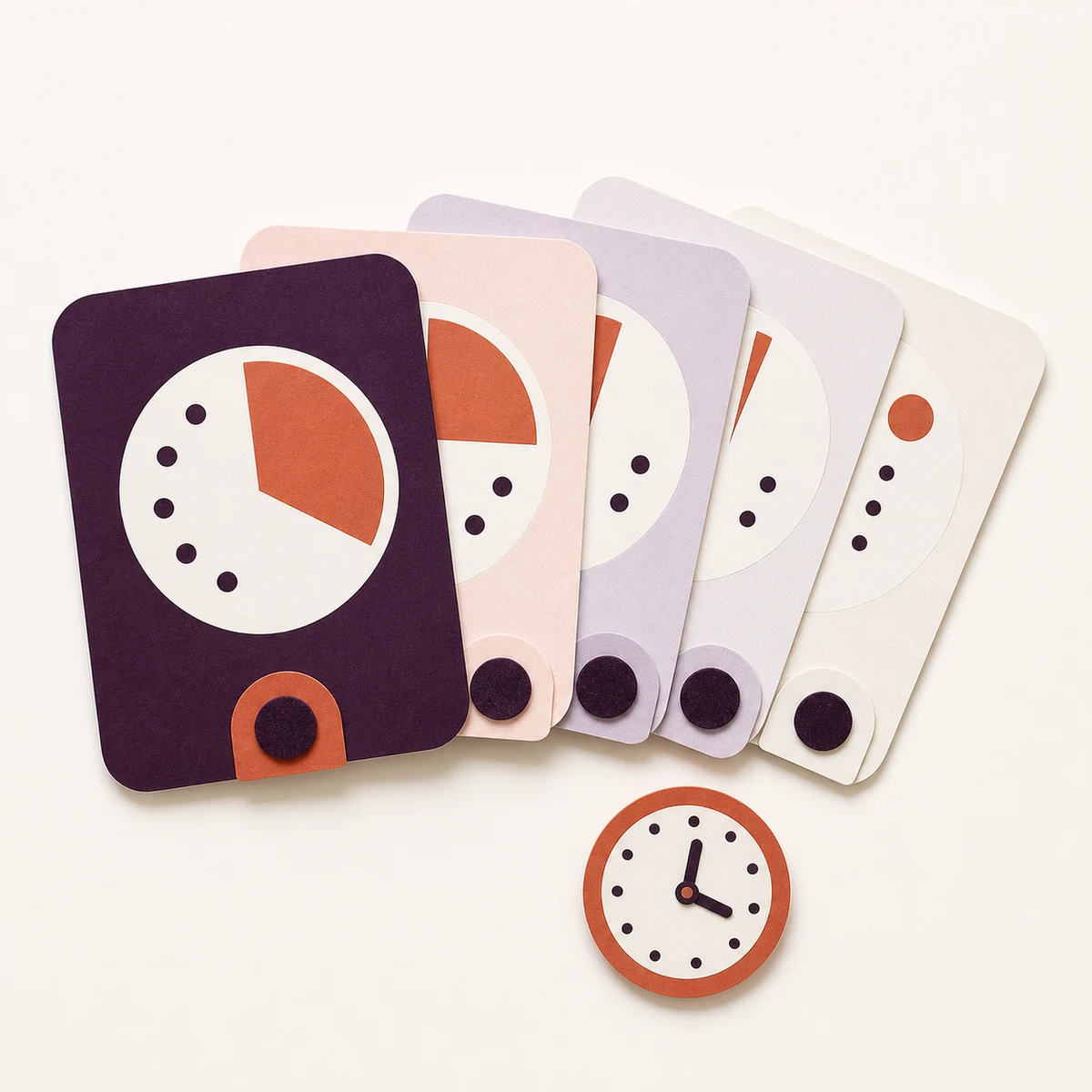
Countdown cards are helpful when the young person understands what comes next but struggles to judge when the change will happen. A visual countdown makes the passing of time visible. Remove or turn over one card at each agreed point so the end does not arrive as a surprise.
A six-step transition routine
- Agree the next step early. Show the next activity before the countdown begins.
- Check understanding. Ask the young person to point, repeat or choose how they want the reminder delivered.
- Start the countdown at a predictable time. Use the same sequence rather than improvising a different warning each day.
- Keep language brief. Pair a short phrase with the visual card instead of adding more explanation.
- Mark the end clearly. Let the young person remove the final card, tick the step or move the symbol.
- Acknowledge the transition. Notice the effort involved, including partial success and recovery after difficulty.
What to avoid
- Showing a card only after the young person has already become distressed.
- Using “five minutes” to mean several different lengths of time.
- Adding threats or consequences to a neutral visual prompt.
- Promising a “then” activity that may not be available.
- Continuing to talk when the young person is asking for less language.
If a transition repeatedly breaks down, review the plan rather than simply increasing the number of prompts. The next activity may be unclear, the time may be unrealistic, or the young person may need a regulating step between the two activities.
Make the support portable
Transitions happen in cars, schools, waiting rooms and community settings as well as in the home. A small card set is often more useful than a large wall display. Keep a copy with the staff member who is supporting the activity and agree where the young person would like it shown.
A calm transition tool reduces surprise. It does not remove the need to listen when a young person is telling us that the plan is not working.
Recommended resource
Five-Minute Transition Cards
Create a consistent, visible countdown that staff can use across the home and in the community. Clear enough for everyday use and adaptable to individual communication needs.
Practice note: Match countdowns to the individual. Some young people find frequent reminders reassuring; others experience them as pressure. Review the approach together and follow the young person’s care plan.