“Go and brush your teeth” sounds like one instruction. In practice it contains many steps: entering the bathroom, finding the equipment, tolerating taste and sensation, brushing for long enough, rinsing, tidying away and returning to the next part of the evening. When the routine regularly becomes a battle, breaking it down can reveal where support is actually needed.
In brief
A visual sequence can reduce repeated prompting, but it works best when sensory needs, timing, choice and the young person’s dignity are considered at the same time.
Start by understanding, not insisting
Avoid assuming that refusal is simply defiance. Tooth brushing can involve strong flavours, foaming toothpaste, water temperature, mirror reflections, noise, touch around the mouth and the feeling of bristles. It may also be linked to previous experiences of adults taking control of personal care.
Observe the routine calmly. Which step is avoided? Does the young person accept the toothbrush but dislike toothpaste? Is the bathroom too busy? Does the demand arrive when they are tired or in the middle of something absorbing? The answer changes the support.
Turn the routine into a visible sequence
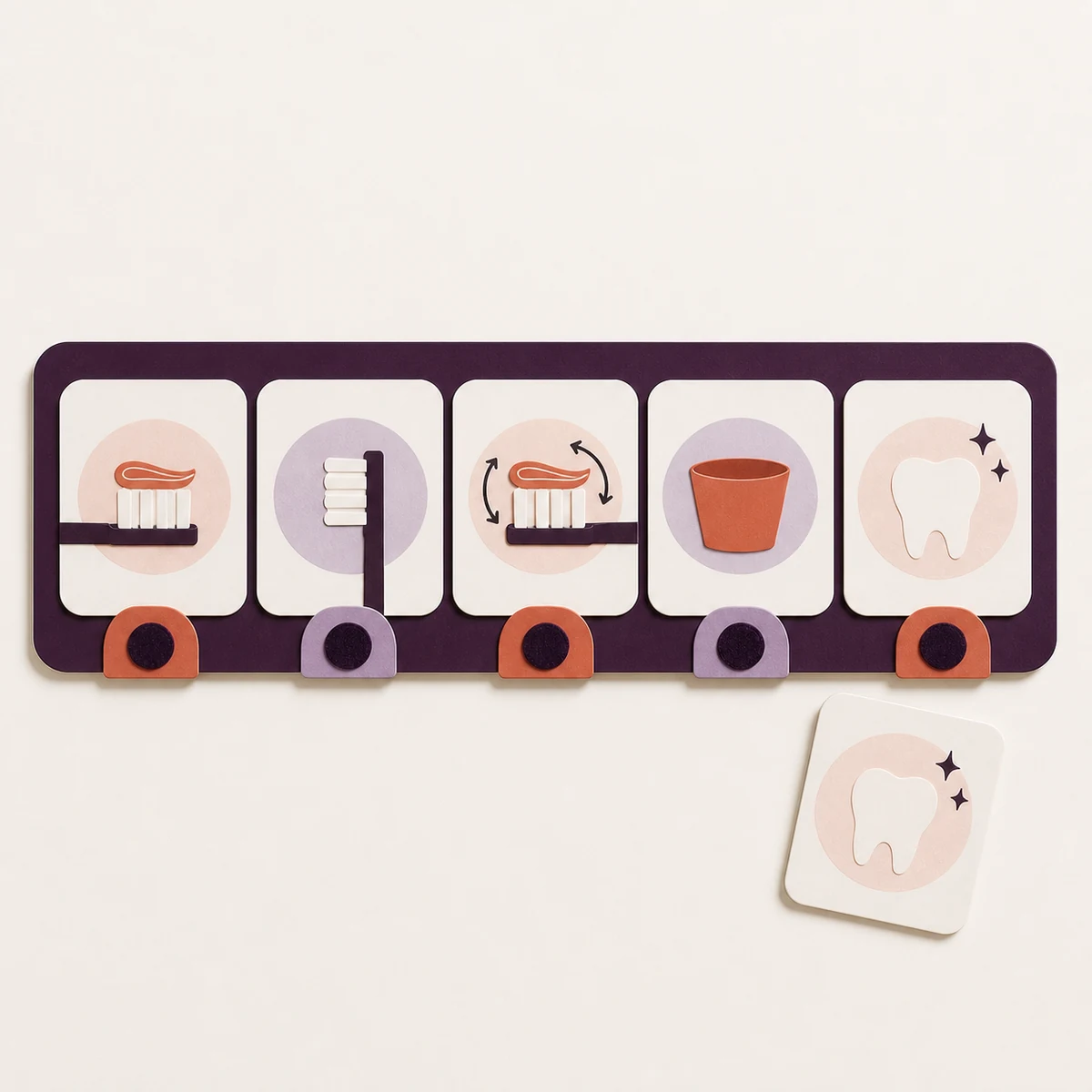
Use a small number of steps and keep the images concrete. A typical sequence might show:
- Put toothpaste on the brush.
- Brush teeth.
- Spit or rinse, according to the young person’s dental guidance.
- Put the brush away.
- Move to the next agreed activity.
Do not add every possible detail on the first day. Begin with the steps the young person needs to understand. More detail can be introduced later if it genuinely supports independence.
Build choice into personal care
Choice does not mean making an essential health routine optional. It means identifying where the young person can have real control. They may choose between two suitable toothbrushes, a flavour accepted within their dental plan, whether the visual strip sits on the mirror or door, which song or timer is used, or whether an adult stays nearby.
Small choices can change the emotional tone of the routine. They also help adults distinguish between the outcome that matters and the particular method used to reach it.
Fade prompts instead of creating dependence
If an adult points to every card and gives an instruction for every step, the visual can become another form of constant prompting. Pause before helping. Let the young person check the strip, remove a finished card or indicate the next image. Step in only where support is needed.
Over time, reduce the number of cards or move from pictures to a discreet checklist if that suits the young person. Independence is not always completing the whole routine alone; it can also mean asking for the right help at the right point.
Respond calmly when the routine does not happen
A visual sequence is not a guarantee. If the young person is overwhelmed, adding pressure can make tomorrow harder. Keep language neutral, record what made the routine difficult and agree a fresh attempt or alternative with the appropriate adults. Patterns across several days are more useful than a single “success” or “failure”.
- Was the routine at a predictable time?
- Was the equipment available and acceptable?
- Did staff use the same sequence and language?
- Was the young person given enough processing time?
- Is professional dental or sensory advice needed?
Dignity matters most in the routines where a young person is most dependent on adult support.
A practical visual sequence for everyday use
The Tooth-Brushing Visual Sequence provides a clear, reusable structure that can be displayed, carried or adapted. It is designed to reduce the amount of spoken prompting while keeping each step easy to recognise.
Recommended resource
Tooth-Brushing Visual Sequence
Make the routine visible, consistent and easier to complete one step at a time—without turning personal care into a lecture.
Practice note: Follow the young person’s health plan and advice from their dentist or relevant professional. A visual resource supports understanding; it does not replace clinical guidance.