A key work session can be a protected space for reflection, planning and relationship-building. It can also feel like a formal meeting that exists mainly to complete paperwork. The difference is rarely the quality of the form. It is the clarity of purpose, the relevance of the topic and the amount of ownership the young person experiences.
In brief
Plan one meaningful outcome, offer more than one way to participate and end with an action that both the young person and adult understand.
Begin with a purpose, not a worksheet
Before the session, complete one sentence: “By the end of this conversation, it would be useful if…” The answer might be understanding the young person’s view of a recent incident, preparing for a review, identifying a small independence goal or making a plan for an upcoming change.
If the purpose is too broad, the session will drift. “Talk about behaviour” is vague. “Understand what made Tuesday evening difficult and agree one thing adults can change” is specific and collaborative.
Invite participation in more than one form
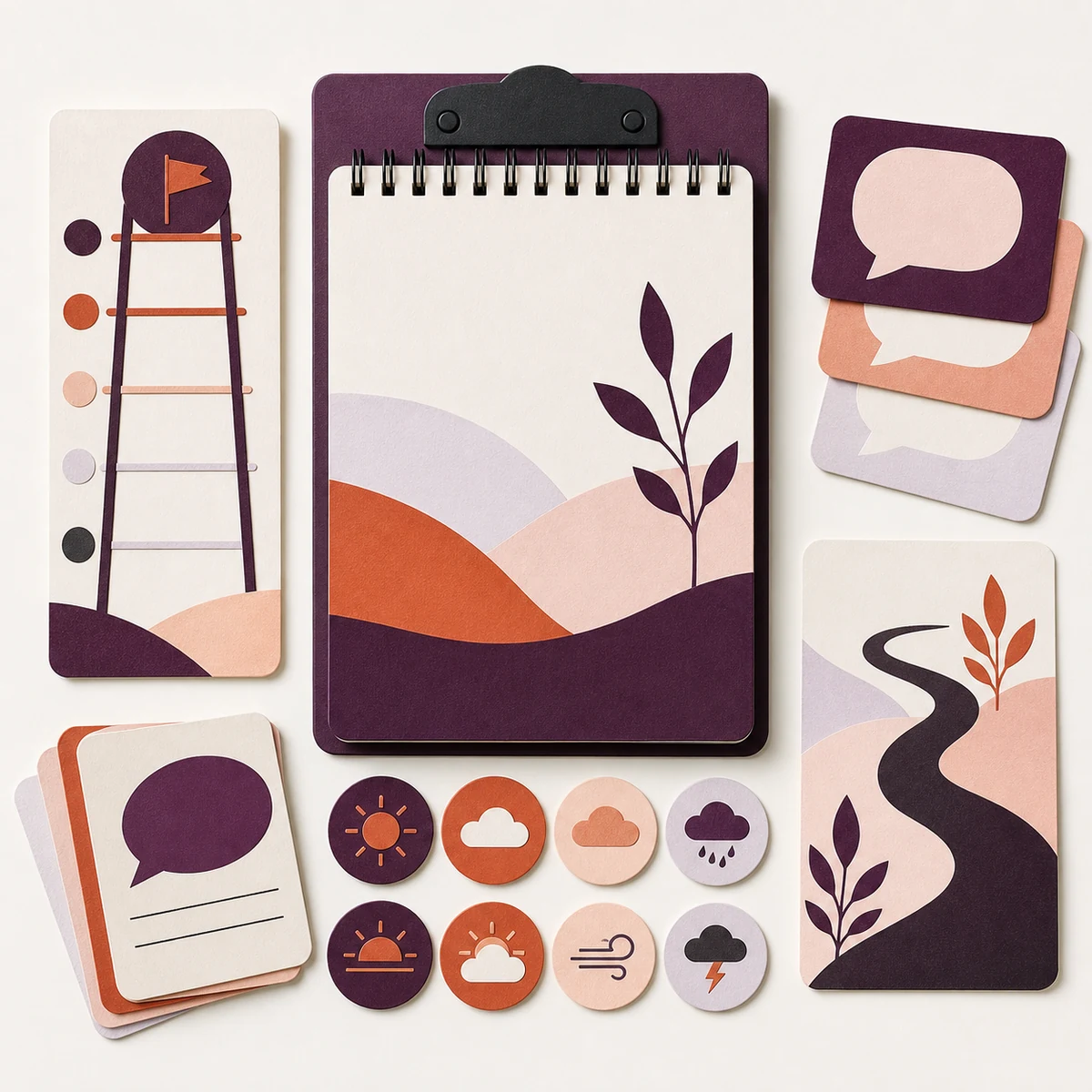
Not every young person wants to sit opposite an adult and answer direct questions. A session might happen while walking, cooking or driving, provided confidentiality and attention can be maintained. Some young people communicate more clearly through scaling, drawing, sorting cards, writing privately or choosing between prompts.
Offer a route into the conversation:
- “Would you rather start with what is going well or what needs changing?”
- “Do you want to talk, write or use the cards?”
- “Shall we do ten minutes now and come back to it later?”
Choice over format does not remove the adult’s responsibility to address important topics. It makes engagement more possible.
Use a simple session shape
- Check in. Establish how the young person is arriving and whether this is a workable moment.
- Agree the focus. Name the topic and ask what they want included.
- Explore. Use open questions, visual prompts or a timeline without rushing to solutions.
- Choose one next step. Make it small, specific and realistic.
- Confirm responsibility. Record what the young person will do and what adults will do.
- Close the loop. Agree when the action will be reviewed.
Record the young person’s meaning, not only the event
A useful record distinguishes between what was observed, what the young person said and the adult’s professional interpretation. Avoid rewriting the young person’s words into institutional language that changes their meaning. Where possible, review the main points with them and explain where the record will be stored or shared.
The record should show action as well as discussion. “We spoke about school” tells the next adult very little. “The young person identified noisy arrival time as the hardest part; key worker will ask school about a quieter entry and update by Friday” supports continuity.
When the young person does not want to engage
Refusal is information. The timing, relationship, topic or format may not feel safe or worthwhile. Be clear if something must be discussed, but avoid turning the session into a contest. Offer another time, a different adult or a different way to contribute. Record the attempt factually and continue building the conditions for participation.
A successful session is not the one with the most completed boxes. It is the one that creates shared understanding and a next step people can act on.
Recommended resource
Key Work Session Toolkit
Bring structure to preparation, check-ins, goal-setting, conversation prompts and follow-up while keeping the young person’s voice at the centre.
Practice note: Follow organisational recording requirements, confidentiality guidance and the young person’s care plan. A toolkit supports thoughtful practice; it does not replace supervision or professional judgement.