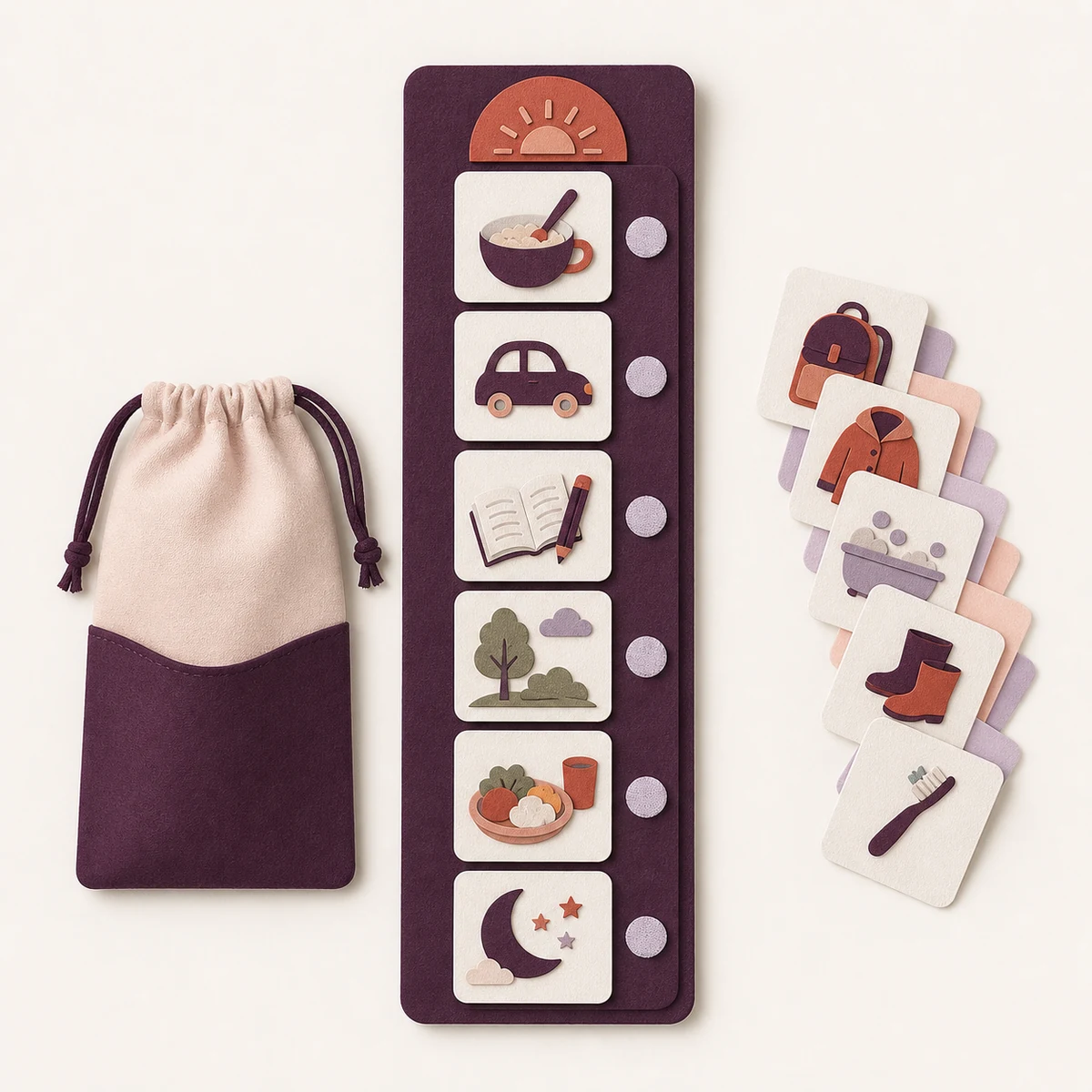
A visual timetable can make a busy day easier to understand, but only if it is current, readable and part of the daily routine. A beautifully designed board that still shows yesterday’s plan quickly becomes background decoration. The aim is a living support that the young person can check, change and gradually use with less adult prompting.
In brief
Begin with the parts of the day that matter most, use symbols the young person recognises and build an honest way to show changes.
Decide what the timetable needs to solve
Do not start by filling every hour. Identify the question the young person most often needs answered. It might be “When am I going out?”, “Who is on shift?”, “What happens after school?” or “How long until bedtime?” The timetable should make that information easier to find.
For one young person, three broad parts of the day may be enough. Another may need a detailed sequence for the morning but only one symbol for the afternoon. Personalisation is more important than completeness.
Choose the right level of information
Too little information leaves uncertainty. Too much creates a wall of symbols that is difficult to scan. Start with essential anchors:
- morning and evening routines;
- school, appointments or contact;
- meals and planned activities;
- travel or important transitions;
- free time and opportunities for choice.
Use photographs, icons or short written labels according to the young person’s communication preferences. Do not assume a symbol is obvious—check what it means to them.
Build the timetable together
Where possible, update the board with the young person at a predictable time. This may be the evening before, during breakfast or after school. Ask which activities need to be shown and where choices can be added. Shared preparation turns the timetable from an adult instruction board into a mutual plan.
Let the young person remove, turn over or move finished activities. That physical action makes progress visible and provides a natural answer to “what is next?”
Show change honestly
A timetable that never changes is not realistic. Include a change symbol, blank card or clear method for replacing an activity. Explain what is known and unknown. If an appointment time is uncertain, show a broader “waiting” or “later” stage rather than giving false precision.
When plans change, acknowledge the impact. Updating the board is useful, but it does not mean the young person should immediately feel comfortable with the change. Offer processing time and the regulation support described in their plan.
Make staff consistency easy
Store spare symbols close to the board, agree who updates it and include the routine in handover. If creating the timetable takes too long, it will not survive a pressured shift. A starter set with consistent sizing and storage removes some of that friction.
Review after the first week:
- Does the young person look at the timetable independently?
- Which parts prompt questions or confusion?
- Are staff keeping it accurate?
- Does it include meaningful choices and preferred activities?
- What can be removed to make it clearer?
Know when to simplify
If the board is being ignored, do not assume the young person “will not engage”. It may be too detailed, in the wrong place, introduced mainly during conflict or built from unfamiliar symbols. Return to a short Now & Next structure and grow the timetable from there.
A useful timetable is not a promise that nothing will change. It is a reliable way to understand the plan when change happens.
Recommended resource
Visual Timetable Starter Pack
Set up a clear daily planning system with coordinated activity cards, a flexible sequence and practical storage for the symbols you need next.
Practice note: Adapt the level of detail and symbol type to the individual. The timetable should reflect the care plan and actual arrangements, and it should never be used to prevent reasonable choice or communication.